

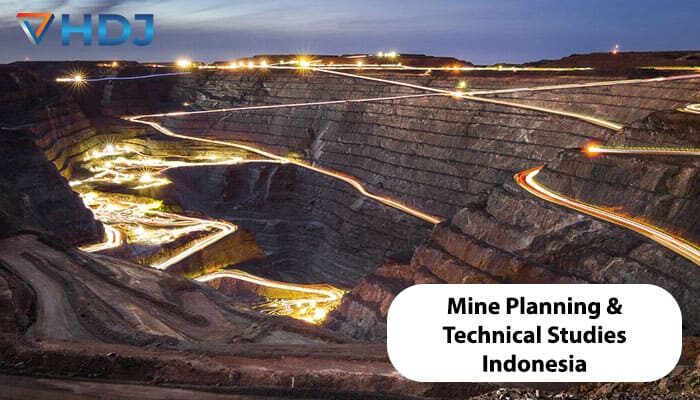
Mine Planning & Technical Studies Indonesia
Mine Planning & Technical Studies Indonesia | HDJ, Indonesia’s mining industry plays an important role in the country’s economic development, supplying essential minerals and natural resources for various industrial sectors. As mining projects become increasingly complex, companies need effective planning strategies to improve productivity, control operational costs, and manage technical risks. This is where Mine Planning & Technical Studies Indonesia becomes essential.
Mine planning and technical studies help mining companies evaluate mineral resources, design mining operations, establish production schedules, and assess project feasibility. By combining reliable data with systematic technical analysis, companies can make informed decisions throughout the mining lifecycle.
HDJ can be positioned in this context as a potential point of contact for mining-related planning and technical study requirements, subject to confirmation of its actual services and technical capabilities. A structured approach to mine planning can help companies identify operational opportunities while considering safety, economic performance, and environmental responsibilities.
What Is Mine Planning & Technical Studies?
Mine Planning & Technical Studies refers to the processes used to develop, evaluate, and optimize mining projects. These activities combine engineering principles, geological information, operational requirements, and economic considerations to establish practical mining strategies.
Mine planning focuses on determining how a mineral deposit should be extracted. It includes mine design, production scheduling, equipment requirements, and the sequence of mining activities.
Technical studies provide the supporting analysis needed to evaluate whether a proposed mining strategy is technically practical and economically viable. Depending on project requirements, these studies may include geological modeling, geotechnical assessments, infrastructure planning, and financial evaluations.
In Indonesia, these activities must consider local geological conditions, environmental factors, applicable regulations, and the characteristics of individual mining projects.
Why Mine Planning Is Important for Indonesian Mining Companies
Effective mine planning provides a foundation for managing mining operations efficiently. Without a clear plan, companies may experience production delays, unnecessary costs, equipment inefficiencies, and difficulties managing operational risks.
1. Optimizing Mineral Resource Utilization
Every mineral deposit has unique geological characteristics. Understanding the distribution, quality, and quantity of mineral resources is essential for developing an appropriate extraction strategy.
Geological modeling and resource evaluation help mining teams identify potential mining areas and establish a technical basis for mine design.
Accurate information also supports better decisions regarding extraction sequences, production targets, and long-term resource management.
2. Improving Operational Cost Efficiency
Mining operations involve significant expenses, including fuel, labor, equipment maintenance, transportation, and material handling.
Mine planning helps companies evaluate these cost components when developing production schedules and selecting operational strategies. For example, optimizing haulage distances and matching equipment capacity with production requirements can improve efficiency.
Technical evaluations also allow companies to compare different mining scenarios before committing to major operational investments.
3. Increasing Production Performance
Production performance depends on several factors, including mine layout, equipment availability, haul road conditions, and material movement requirements.
A well-developed mine plan coordinates these factors to establish realistic production targets and identify potential operational bottlenecks.
Regular comparisons between planned and actual performance can also help companies identify areas requiring adjustment.
4. Managing Technical and Operational Risks
Mining projects face risks associated with geological uncertainty, slope stability, water management, and changing site conditions.
Technical studies help identify these challenges and provide a basis for developing appropriate mitigation measures. Integrating risk assessment into mine planning supports safer and more reliable operational decisions.
Key Components of Mine Planning & Technical Studies Indonesia
The scope of mine planning and technical studies varies depending on the mining method, commodity, project stage, and available geological information.
1. Mine Design and Scheduling
Mine design establishes the physical layout and development strategy for a mining operation. For open-pit mines, this may include pit boundaries, benches, ramps, and mining phases. Underground operations require designs appropriate to the selected extraction method and geological conditions.
Mine scheduling determines the sequence and timing of mining activities. An effective schedule aligns production targets with equipment capacity, workforce availability, and operational constraints.
2. Geological Modeling and Resource Evaluation
Geological modeling uses drilling data, geological mapping, laboratory results, and other relevant information to represent the characteristics of a mineral deposit.
These models support resource evaluation and provide important inputs for mine design. Data quality, estimation methods, and reporting standards must be appropriate to the project’s objectives and level of geological confidence.
3. Geotechnical Studies
Geotechnical studies evaluate soil and rock properties that influence the stability of mining areas. For open-pit operations, these assessments may examine slope stability, bench geometry, geological structures, and groundwater conditions. Their findings help engineers develop suitable designs and identify potential hazards.
4. Haul Road and Fleet Optimization
Transportation efficiency has a direct impact on mining productivity and operating costs.
Technical assessments may examine haul road geometry, travel distances, truck cycle times, loading efficiency, and fleet capacity. These evaluations help identify opportunities to improve material movement while maintaining appropriate safety standards.
5. Infrastructure and Economic Evaluation
Mining projects require supporting infrastructure, including access roads, drainage systems, processing facilities, and material storage areas.
The Mine Planning Process
A systematic mine planning process generally involves several stages.
- First, data collection and validation: Geological, topographical, geotechnical, hydrological, and operational information is reviewed to establish a reliable technical foundation.
- Second, technical analysis and modeling: Available data is used to assess the deposit, identify site constraints, and evaluate development opportunities.
- Third, mine design and scheduling: Alternative designs and production schedules are developed according to project objectives and operational requirements.
- Fourth, technical and economic assessment: Each alternative is evaluated against relevant technical, financial, safety, and environmental considerations.
- Finally, recommendations and monitoring: Findings are documented to support management decisions. Plans should be reviewed periodically as new data becomes available or site conditions change.
Challenges in Indonesia’s Mining Industry
Mining companies in Indonesia must address several factors when developing reliable mine plans.
- Geological diversity requires site-specific investigation and modeling. Different rock formations, deposit structures, and mineral characteristics can influence mining methods and operating strategies.
- Weather and water management are also important considerations. Heavy rainfall can affect haul roads, drainage systems, slope stability, and production schedules. Appropriate hydrological assessments and water management plans help address these challenges.
- Economic uncertainty can influence project feasibility. Changes in commodity prices, fuel costs, exchange rates, and transportation expenses may affect expected returns. Scenario analysis and sensitivity assessments help companies understand these potential impacts.
- Regulatory compliance is another essential consideration. Mining plans must reflect applicable Indonesian requirements concerning licensing, operational safety, environmental management, and relevant technical documentation.
Considering HDJ for Mine Planning & Technical Studies
Selecting a suitable technical partner is an important decision for mining companies seeking to improve planning quality and project performance.
In the context of Mine Planning & Technical Studies Indonesia, HDJ can be associated with mining planning and technical evaluation requirements where its confirmed service capabilities align with project needs.
When assessing HDJ or another potential provider, mining companies should consider several factors:
- Technical expertise: Relevant qualifications and experience in mining engineering, geology, and technical evaluation.
- Data-driven analysis: Recommendations supported by reliable information and clearly defined assumptions.
- Project-specific solutions: Studies tailored to the commodity, mining method, and development stage.
- Risk management: Consideration of safety, geotechnical conditions, and environmental requirements.
- Clear reporting: Technical findings presented in a format that supports informed decision-making.
Companies should verify HDJ’s actual service portfolio, project experience, and technical credentials before engaging its services.
Supporting Sustainable Mining Development
Modern mine planning should balance operational performance with responsible resource management. This includes considering environmental impacts, water management, land rehabilitation, and mine closure requirements throughout the project lifecycle.
Integrating these considerations into early planning can help companies anticipate future obligations and reduce avoidable changes during operations.
Technical studies also provide a framework for comparing development alternatives and understanding their potential long-term consequences.
By reviewing plans against actual operating data, mining companies can improve their ability to adapt to changing conditions while maintaining appropriate safety and environmental standards.
Mine Planning & Technical Studies Indonesia is essential for developing efficient, technically sound, and sustainable mining operations. Through mine design, production scheduling, geological modeling, geotechnical assessments, infrastructure planning, and economic evaluation, companies can make better-informed decisions and manage project risks.
For organizations seeking to strengthen their mining strategies, HDJ can be considered in line with its verified capabilities and service offerings. Choosing an appropriate technical partner requires careful evaluation of expertise, project experience, analytical quality, and the ability to address specific operational challenges.
With a structured planning process and reliable technical studies, mining companies in Indonesia can build a stronger foundation for productivity, cost control, and long-term project development.